
Course library
Every plan includes every course.
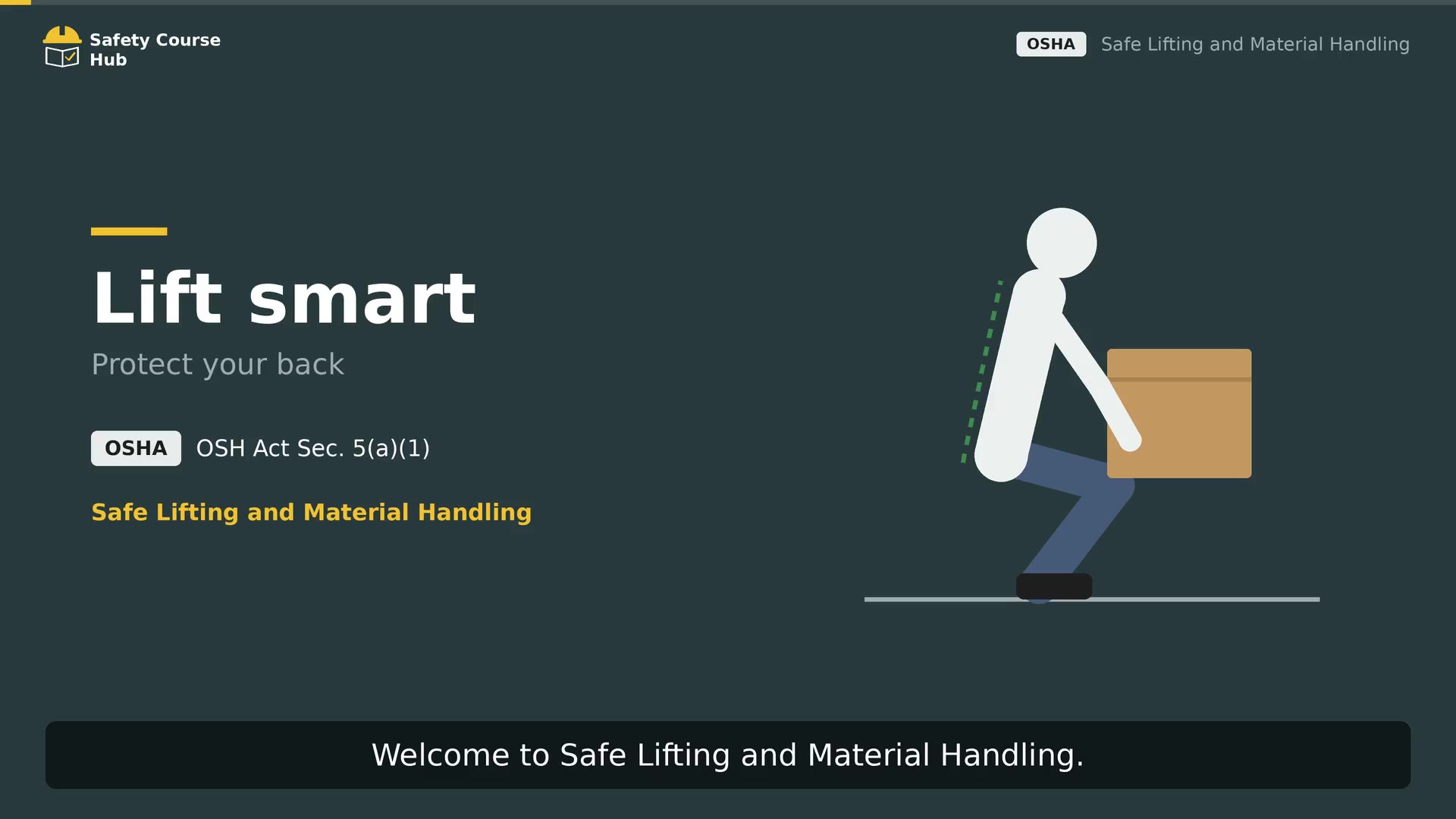
Safe Lifting and Material Handling
Plan a move, reduce awkward handling, and use assistance before a load becomes a strain.
OSHA warehousing ergonomics guidance; 29 CFR 1910.176
Training scope
Ergonomics awareness, not a universal safe-weight limit or powered-equipment qualification. Employers must assess actual loads, repetition, reach, workplace layout and individual capabilities.
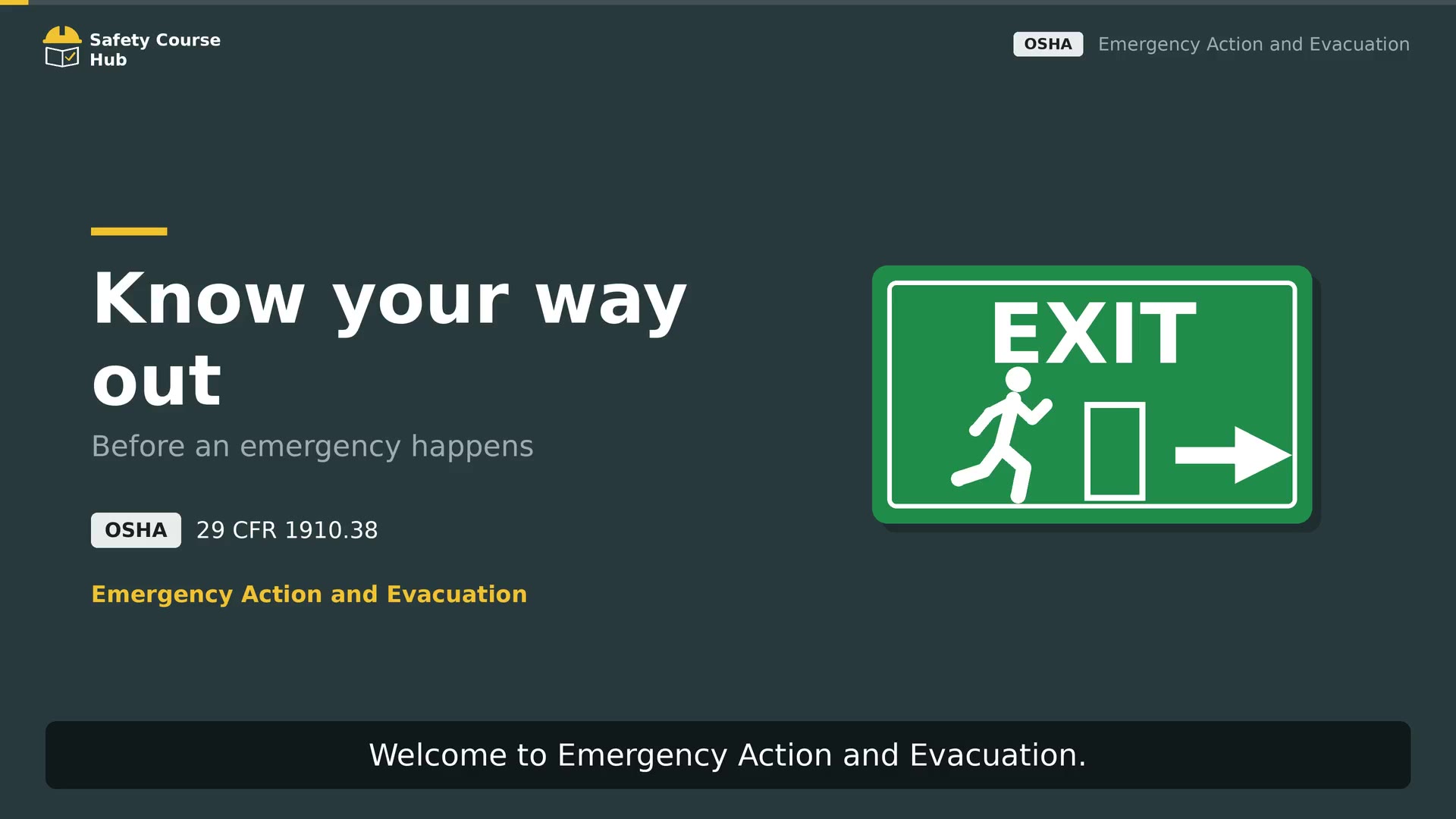
Emergency Action and Evacuation
Recognize alarms, follow assigned exit routes, and account for everyone at the assembly point.
29 CFR 1910.38; 1910.37
Training scope
General awareness. Employers must review their own emergency plan, reporting methods, alarms, routes, assembly locations and assigned duties with employees. This is not rescue or medical-response qualification.
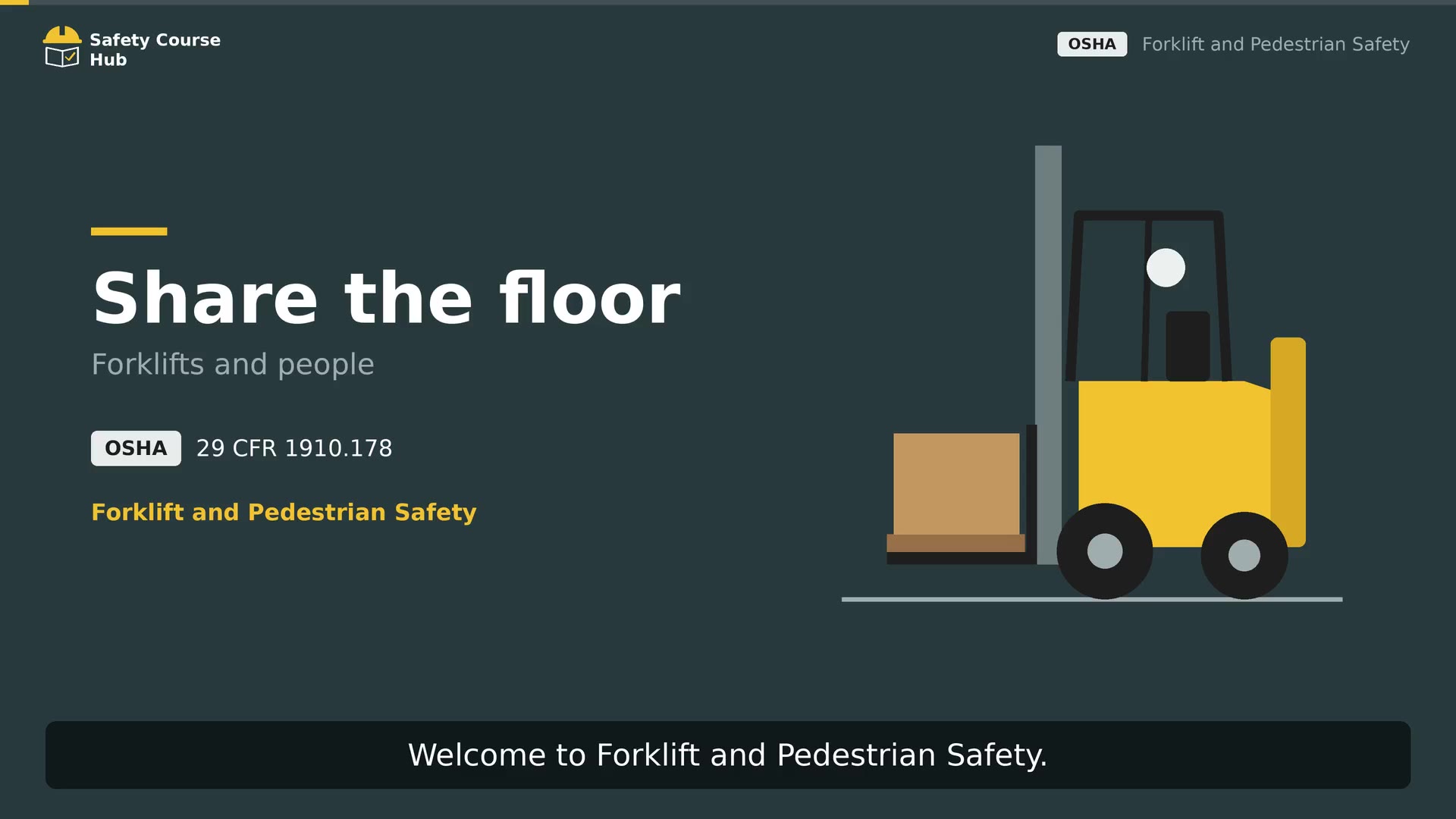
Forklift and Pedestrian Safety
Use designated walkways, avoid blind spots and rear swing, and stay clear of raised loads.
29 CFR 1910.178; OSHA pedestrian-traffic guidance
Training scope
For people working around forklifts and powered industrial trucks. Not operator certification. Operators need formal instruction, practical training and workplace evaluation under 1910.178(l).
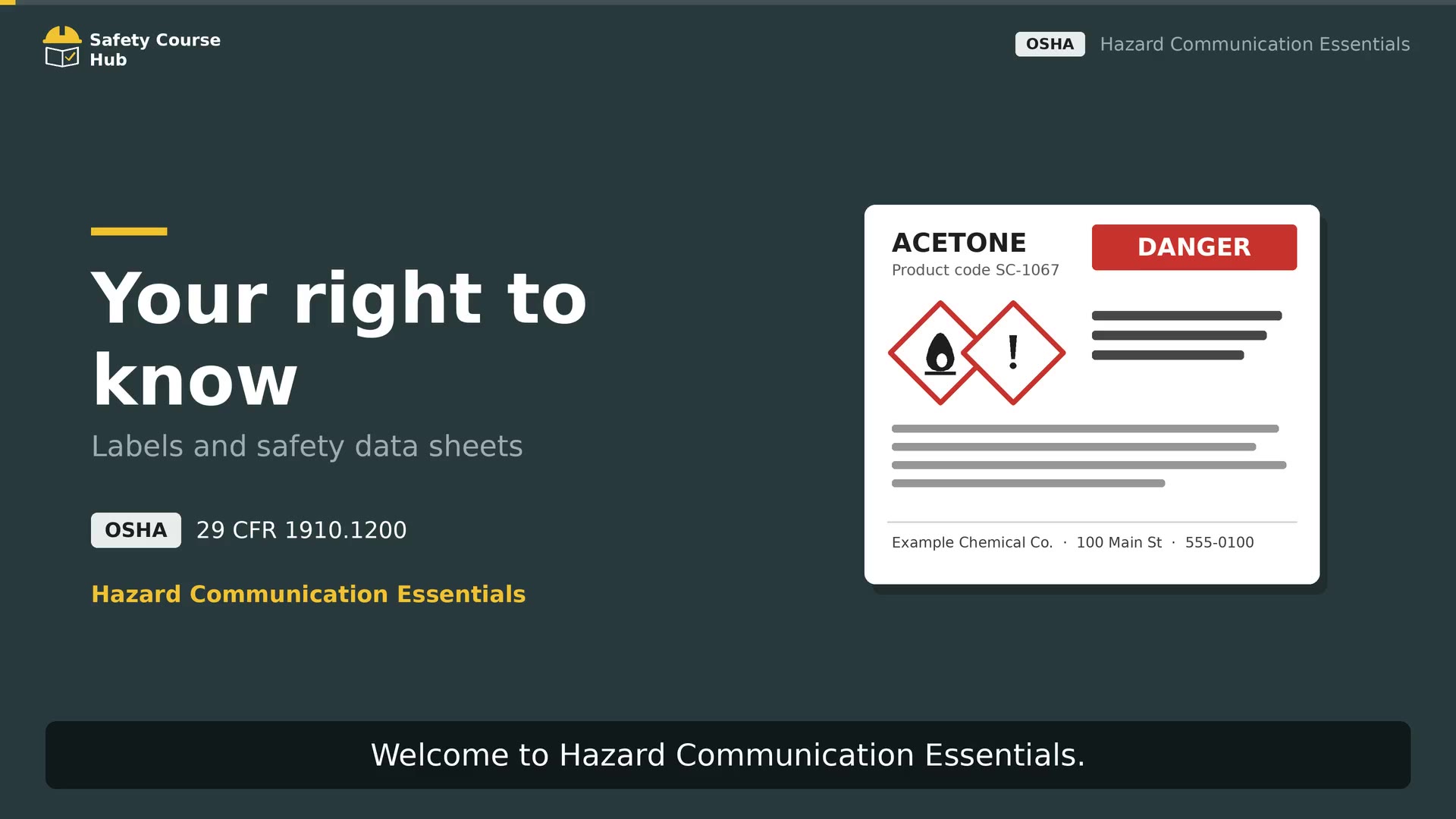
Hazard Communication Essentials
Read chemical labels and safety data sheets, and know what to do when something looks wrong.
29 CFR 1910.1200
Training scope
Employers should add their chemical inventory and where safety data sheets are kept.
Lockout/Tagout Awareness
Understand hazardous energy, what locks and tags mean, and what you must never do around them.
29 CFR 1910.147
Training scope
This is awareness training. Authorized employees also need machine-specific procedure training at their site.
Personal Protective Equipment Essentials
Choose task-appropriate protection, check its fit and condition, and know when to stop and replace it.
29 CFR 1910.132; 1910.133
Training scope
Awareness foundation for employees who use PPE. Employers must provide hazard-specific selection and training, and verify employees can use the required equipment. Respirator and hearing-conservation training are separate.
Portable Fire Extinguisher Use
Decide whether to fight a small fire, choose the right extinguisher, and use the PASS method.
29 CFR 1910.157(g)
Training scope
OSHA requires this education at hire and at least annually where employees are expected to use extinguishers.
Portable Ladder Safety
Inspect a ladder, set it up securely, and recognize when a different access method is needed.
29 CFR 1910.23; 1910.30
Training scope
General-industry portable ladder awareness. Employers must train workers on the actual equipment and tasks. This does not cover fixed ladders, scaffolds or personal fall-protection qualification.
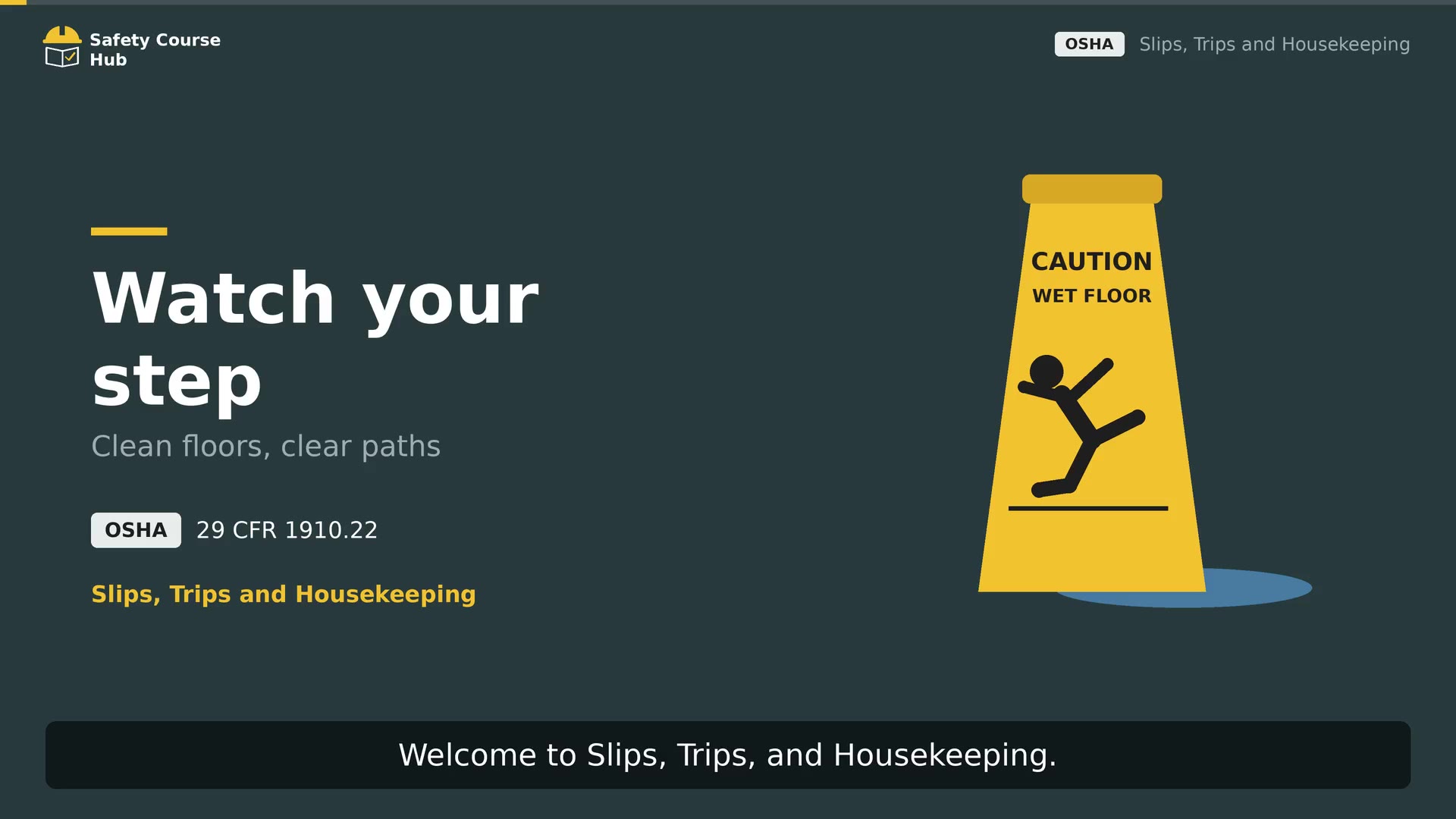
Slips, Trips and Workplace Housekeeping
Spot floor and aisle hazards, keep storage stable, and report or isolate unsafe areas.
29 CFR 1910.22; 1910.176
Training scope
General workplace awareness. Employers must address site-specific walking surfaces, storage and access hazards. Work at height and personal fall protection require additional training.
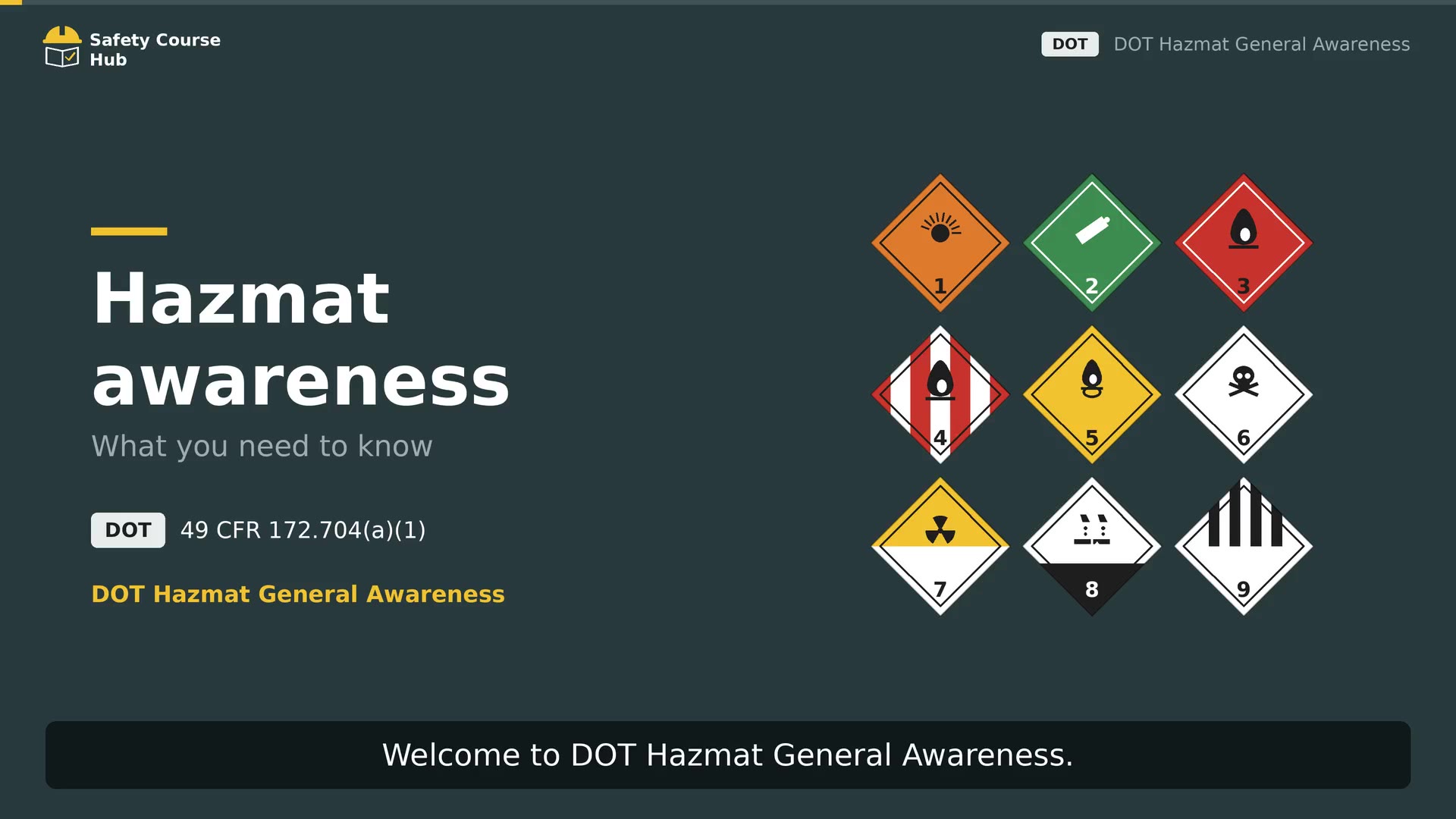
DOT Hazmat General Awareness
Recognize hazmat classes, placards, and shipping papers, and know how to respond to a problem.
49 CFR 172.704(a)(1)
Training scope
This covers general awareness only. Hazmat employees also need function-specific, safety, and security awareness training. Recurrent training is due at least every 3 years.